Description
BPC-157 + TB-500 — Research Peptide Blend
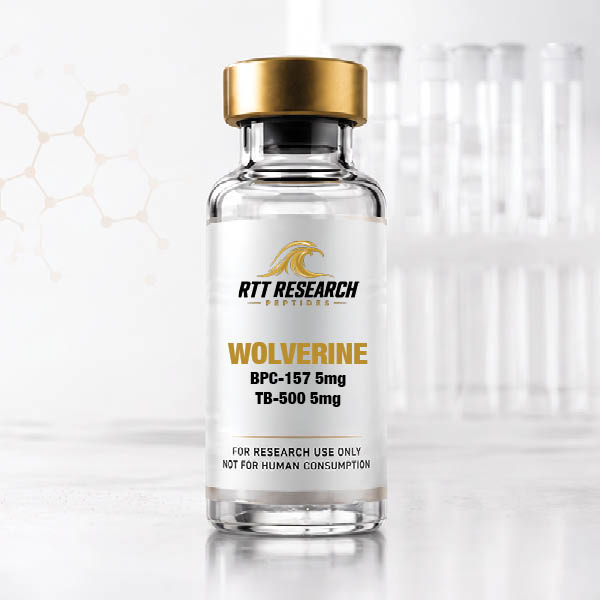
Wolverine Stack combines BPC-157 and TB-500 in a single research formulation. These peptides have attracted scientific interest through research involving cellular behaviour, tissue responses, and related biological processes.
The combination brings together two distinct compounds. Research on either ingredient alone does not establish the safety, effectiveness, or biological activity of the finished blend.
Research Highlights
Two-component formulation: BPC-157 and TB-500 combined in one research vial.
Connective tissue research: BPC-157 studies examining tendon-cell behaviour and responses in experimental models.
Cell migration: Investigation into cellular movement associated with tissue organisation.
Peptide structure: Research examining how thymosin beta-4 fragments differ from the full-length molecule.
Combination research questions: Assessment of whether two compounds produce different effects together than individually.
Evidence limitations: Human safety, therapeutic effectiveness, and claimed synergy have not been established for this blend.
These highlights describe research topics associated with the ingredients. They do not establish benefits or validate the quality of an individual product.
Understanding the Two Components
BPC-157
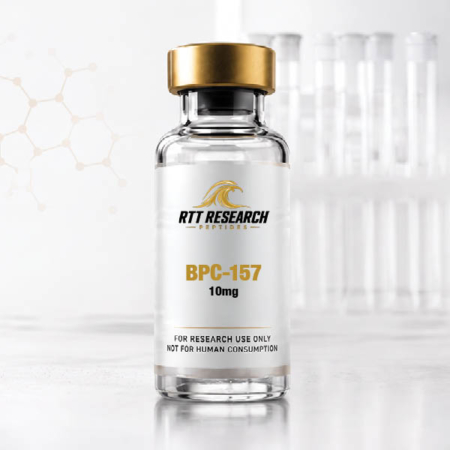
BPC-157 is a synthetic peptide consisting of 15 amino acids. It has been investigated primarily in laboratory and animal studies involving tissue responses, tendon fibroblasts, and gastrointestinal injury models.
Cell-based experiments have examined migration, survival under stress, and signalling processes associated with tissue organisation. These findings do not demonstrate that BPC-157 treats injuries or digestive conditions in humans.
TB-500
TB-500 commonly refers to an acetylated, seven-amino-acid fragment associated with thymosin beta-4.
Full-length thymosin beta-4 has been investigated in research involving actin-related processes, cell migration, and experimental wound models. However, the full-length peptide and its fragments are distinct compounds. Findings from one cannot automatically be attributed to another.
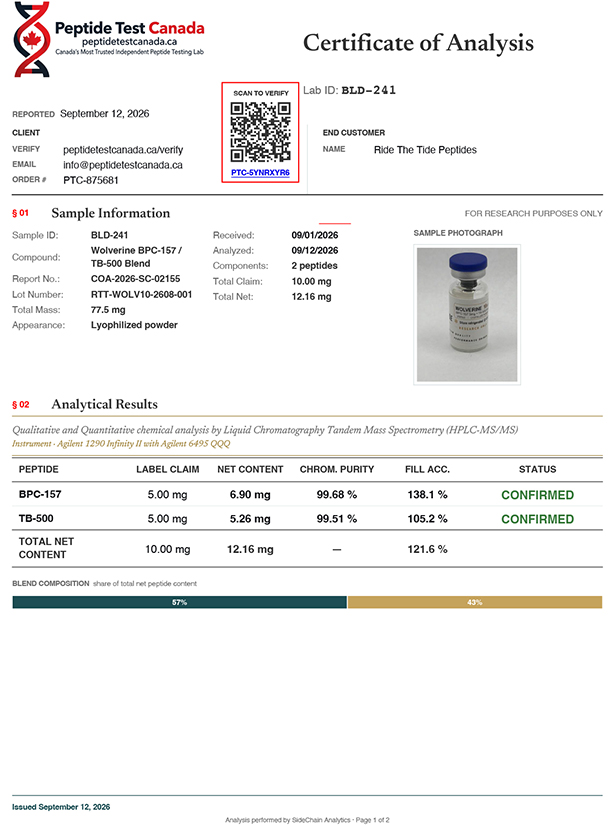
The exact identity of the TB-500 component should be established through sequence and analytical documentation.
Connective Tissue & Cellular Response Research
Tissue responses involve coordinated interactions between cells, structural proteins, and signalling systems. Laboratory research can examine individual parts of these processes, including cell movement and changes in cellular activity.
BPC-157 experiments involving tendon fibroblasts provide one area of investigation. Research involving thymosin beta-4 and selected fragments provides another.
Combining the ingredients does not prove that their activities are complementary or that the blend produces stronger effects. Those questions require direct testing of the specific formulation.
What Makes Wolverine Stack Distinct?
Wolverine Stack is a combination formulation rather than a single peptide. Its defining feature is the inclusion of BPC-157 and TB-500 in the same vial.
“Wolverine” is a product nickname, not a scientific classification or evidence of regenerative effects. The name does not establish rapid healing, improved recovery, or superior results.
Storage & Handling
Lyophilized powder — unopened vial
Follow the storage temperature specified on the product label and supporting batch documentation.
Protect from light and moisture.
Keep the vial tightly sealed until needed.
Avoid repeated temperature swings and freeze–thaw cycles.
These instructions apply to the unopened, lyophilized product. Storage requirements for the blend should be supported by formulation-specific information. Conditions and usable periods after reconstitution require separate guidance.
Frequently Asked Questions
What is Wolverine Stack?
Wolverine Stack is a name commonly used for a research formulation combining BPC-157 and TB-500.
Is Wolverine Stack one peptide?
No. It contains two separate peptide ingredients. Combining them does not create a single new peptide molecule.
What does the total milligram amount mean?
It refers to the combined stated quantity of both peptides. The amount of each ingredient should be listed separately on the product label. It is not a recommended dose or administration instruction.
Has the combination been proven to work better than either ingredient alone?
No established clinical evidence demonstrates that this blend is more effective than either ingredient individually. Claims of synergy require direct comparative research.
Is the TB-500 component the same as full-length thymosin beta-4?
Not necessarily. TB-500 commonly identifies a shorter acetylated fragment. Researchers should confirm the supplied ingredient’s identity rather than treat the names as interchangeable.
Is this product intended for personal use?
No. This product is offered for laboratory research only and is not intended for human or veterinary administration.
Laboratory Research Only
Not for human or animal administration. Information on this page describes scientific research and does not provide medical advice, dosing instructions, or treatment recommendations. Research findings are not guarantees of experimental results.