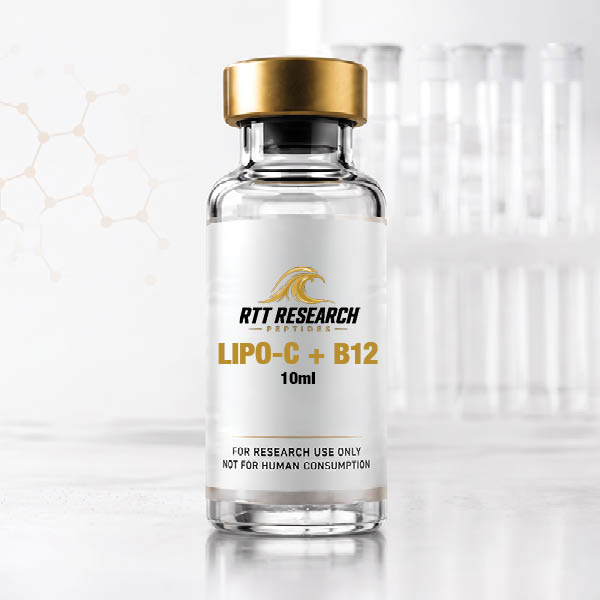
Description
Research Highlights
Lipid metabolism: Ingredient roles in fatty acid transport, phospholipid synthesis, and hepatic lipid processing.
Cellular energy: Biochemical pathways involving mitochondrial fatty acid utilization and coenzyme A formation.
Nutrient metabolism: B-vitamin participation in enzyme-dependent processes involving carbohydrates, proteins, and fats.
Cellular signalling: Inositol-related signalling pathways and L-Arginine’s role as a nitric oxide precursor.
Methylation: Interconnected pathways involving Methionine, Choline, and Vitamin B12.
Eight-ingredient formulation: A combination of lipotropic compounds, amino acids, and B vitamins in a single research product.
These highlights describe the biochemical roles of individual ingredients. They do not establish benefits, demonstrate the effects of the combined formulation, or validate the quality of an individual research product.
Lipid Metabolism & Cellular Energy
Lipid metabolism involves several interacting processes, including fatty acid transport, energy production, and the formation of cellular membranes.
L-Carnitine participates in the transport of long-chain fatty acids into mitochondria, where they can undergo oxidation. Choline contributes to phospholipid synthesis and lipid transport, while Methionine and Inositol participate in related metabolic pathways.
Vitamin B5 is a component of coenzyme A, which is involved in fatty acid metabolism and other energy-producing reactions. Together, these ingredient roles provide a biochemical context for investigating how cells process and utilize nutrients.
The presence of these ingredients does not establish that the formulation increases energy expenditure, reduces body fat, or produces a particular experimental outcome.
Methylation & Cellular Signalling
Methylation Pathways
Methylation involves the transfer of methyl groups between molecules. These reactions contribute to processes including cellular maintenance and phospholipid metabolism.
Methionine, Choline, and Vitamin B12 participate in interconnected pathways associated with methyl-group metabolism. Their inclusion provides a basis for investigating these biochemical relationships without assuming that a combined formulation improves methylation or corrects a deficiency.
Cellular & Nitric Oxide Signalling
Inositol participates in cellular signalling systems, including pathways associated with insulin-related metabolic processes.
L-Arginine serves as a precursor to nitric oxide, a signalling molecule involved in vascular function. This biochemical role does not establish that the supplied blend improves circulation or produces a predictable vascular response.
Vitamins B6 and B12 also participate in processes associated with amino acid metabolism, neurotransmitter pathways, and neurological function.
Composition & Concentration
The stated composition per millilitre is:
| Active Ingredient | Amount per mL |
|---|---|
| L-Carnitine | 20 mg |
| L-Arginine | 20 mg |
| Methionine | 25 mg |
| Inositol | 50 mg |
| Choline | 50 mg |
| Vitamin B6 | 25 mg |
| Vitamin B5 | 5 mg |
| Vitamin B12 | 1 mg |
| Total Active Concentration | 196 mg/mL |
Vial volume: 10 mL
Total combined active ingredients: 1.960 mg per vial
Preservative: Benzyl alcohol, 0.9%
The total concentration represents the sum of the eight listed active ingredients. It does not refer to the concentration of any single ingredient or include the preservative.
What Makes LIPO-C + B12 Scientifically Distinct?
LIPO-C + B12 combines ingredients associated with several connected biochemical systems within one formulation.
Its distinguishing feature is this ingredient combination. It is not a single peptide or a compound with one defined receptor target.
Research involving individual ingredients can help explain their biochemical roles. Those findings cannot automatically be applied to the combined product. Interactions, stability, and experimental effects require assessment under the conditions of the intended laboratory protocol.
Considerations for Laboratory Researchers
When selecting research material, the ingredient list and stated concentration are only part of the assessment. Researchers should also consider:
Documentation supporting ingredient identity and concentration.
Whether analytical results correspond to the supplied batch.
The methods used and limitations of available testing.
Formulation compatibility and stability.
Storage and handling requirements.
Suitability for the intended laboratory protocol.
A concentration statement or the presence of a preservative alone does not establish sterility, absence of endotoxins, or suitability for administration.
Storage & Handling
Follow the supplier’s confirmed storage and handling instructions for this formulation and the supplied batch. Storage requirements should account for the stability of the complete blend and its individual ingredients.
Frequently Asked Questions
What is LIPO-C + B12?
LIPO-C + B12 is an eight-ingredient research formulation containing L-Carnitine, L-Arginine, Methionine, Inositol, Choline, and Vitamins B5, B6, and B12.
What does “lipotropic” mean?
The term describes compounds associated with lipid processing and metabolism. It does not establish that a product causes fat loss or treats a metabolic condition.
What does the 196 mg/mL label mean?
It refers to the stated combined mass of the eight active ingredients in each millilitre. It is not a recommended dose or administration instruction.
How much Vitamin B12 does it contain?
The stated Vitamin B12 concentration is 1 mg/mL, equivalent to 10 mg across the full 10 mL vial.
Is LIPO-C + B12 a peptide?
It is a multi-ingredient formulation containing amino acids, related compounds, and vitamins. It is not a single peptide.
Does research on an individual ingredient establish the effects of this blend?
No. Ingredient-level findings do not demonstrate the safety, effectiveness, stability, or experimental performance of the combined formulation.
Is this product intended for personal use?
No. This product is offered for laboratory research only and is not intended for human or veterinary administration.
Laboratory Research Only
Not for human or animal consumption, injection, or therapeutic applications. Information on this page describes biochemical research and does not provide medical advice, dosing instructions, or treatment recommendations. Research findings are not guarantees of experimental results.