Description
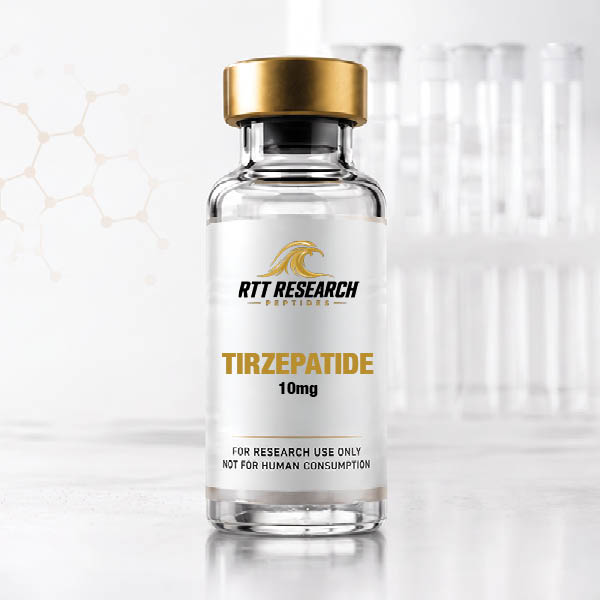
Tirzepatide — Dual Incretin Receptor Research Peptide
Tirzepatide is a synthetic peptide that activates two hormone receptors: glucose-dependent insulinotropic polypeptide (GIP) and glucagon-like peptide-1 (GLP-1). These receptors participate in metabolic signalling, including responses to nutrients, glucose regulation, and appetite-related processes.
Its dual-receptor activity has made tirzepatide a subject of extensive scientific investigation into type 2 diabetes, obesity, and related metabolic conditions. Findings from clinical research describe the studied pharmaceutical molecule and do not independently verify the identity or quality of an individual research product.
Research Highlights
Dual receptor activity: Activation of GIP and GLP-1 receptors within a single molecule.
Glucose metabolism: Research examining insulin secretion, glucose regulation, and related metabolic measures.
Appetite signalling: Investigation into biological pathways associated with hunger, fullness, and food intake.
Energy balance: Studies assessing relationships between nutrient intake, body weight, and energy regulation.
Metabolic research: Investigation into lipid metabolism, adipose tissue, and liver-related metabolic measures.
Clinical evaluation: Research examining therapeutic outcomes, safety, tolerability, and longer-term metabolic effects.
These highlights describe established areas of investigation involving tirzepatide. They do not establish the safety, effectiveness, or quality of an individual research product.
GIP & GLP-1 Receptor Research
GIP and GLP-1 are incretin hormones involved in the body’s response to nutrient intake. Both participate in glucose-dependent insulin secretion, although their broader physiological effects differ.
Tirzepatide activates both receptor systems, allowing researchers to examine how their combined signalling influences metabolic processes.
Scientific investigations consider receptor activation, downstream cellular responses, glucose regulation, and the relationship between different incretin pathways.
Metabolism, Appetite & Energy Balance
Metabolic regulation involves interactions between the gastrointestinal tract, pancreas, brain, liver, and adipose tissue. These systems influence nutrient processing, energy storage, and appetite-related signals.
Tirzepatide research includes investigation into appetite regulation, gastric emptying, body-weight changes, and glucose metabolism.
Researchers also examine how changes in body composition relate to other metabolic measurements. Observed clinical outcomes should not be interpreted as evidence that an independently supplied research material will produce equivalent results.
What Makes Tirzepatide Scientifically Distinct?
Tirzepatide’s distinguishing feature is its combined GIP and GLP-1 receptor activity.
Unlike single-receptor GLP-1 agonists, tirzepatide provides a model for investigating two incretin signalling systems simultaneously.
Retatrutide, by comparison, activates three receptor types: GIP, GLP-1, and glucagon. These structural and pharmacological distinctions are important when comparing research findings.
Considerations for Laboratory Researchers
When selecting research material, researchers should consider:
Documentation supporting peptide identity and stated content.
Whether analytical results correspond to the supplied batch.
The methods used and limitations of available testing.
Formulation, storage, and handling requirements.
Suitability for the intended laboratory protocol.
A purity percentage alone does not establish sterility, absence of endotoxins, or suitability for administration. Research findings involving authorized pharmaceutical formulations do not independently validate other products containing the same named ingredient.
Storage & Handling
Unopened research material
Follow the storage temperature specified on the product label and supporting batch documentation.
Protect from light and moisture where required by the formulation.
Keep containers sealed until needed.
Avoid unnecessary temperature fluctuations.
Storage requirements depend on the supplied formulation. Conditions and usable periods after reconstitution require separate, product-specific information.
Frequently Asked Questions
What is tirzepatide?
Tirzepatide is a synthetic peptide that activates GIP and GLP-1 receptors and has been studied extensively in metabolic and endocrine research.
Why is tirzepatide called a dual agonist?
A dual agonist activates two receptor types. Tirzepatide activates GIP and GLP-1 receptors.
Is tirzepatide the same as retatrutide?
No. Tirzepatide activates GIP and GLP-1 receptors, while retatrutide also activates the glucagon receptor.
What is tirzepatide being studied for?
Research includes type 2 diabetes, obesity, glucose metabolism, body composition, and related cardiometabolic outcomes.
What does the 10 mg label mean?
It refers to the stated peptide quantity. It is not a recommended dose, concentration, or administration instruction.
Is this research product the same as an authorized pharmaceutical?
No equivalence should be assumed. An authorized drug undergoes product-specific assessment of identity, quality, safety, efficacy, and manufacturing standards. The presence of the same named compound does not establish equivalence.
Laboratory Research Only
Not for human or animal administration. Information on this page describes scientific research and does not provide medical advice, dosing instructions, or treatment recommendations. Research findings are not guarantees of experimental results.